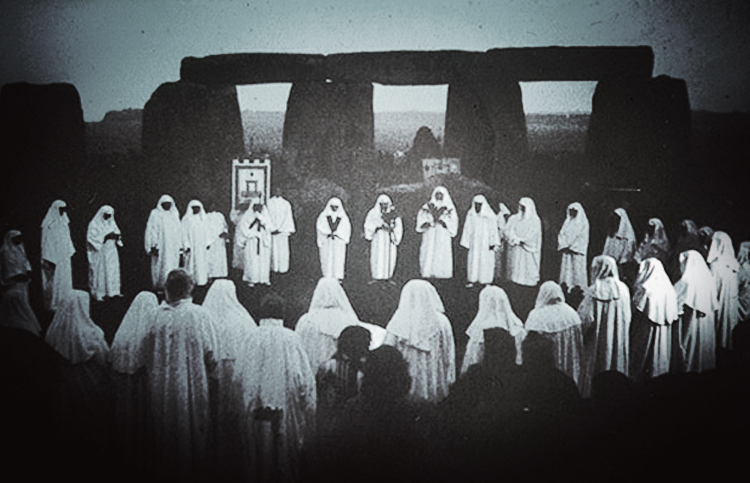
Cults and Conformity: Their Roots of Formation

What does it mean to conform?

As defined by Gilovech and colleagues conformity is the change of one’s behavior or point of view because of clear or ambiguous pressure (real or not) from others (2016). Now lets explore the factors that influence conformity pressure and why cults are undisputed examples of conformity.

Expertise and Status

The unfortunate events at the Jamestown massacre of 1978 was marked in history as one of the worst tragedies by the work of cults around the world. The leader, Reverend Jim Jones, a definitive expert on theology led his followers of “The People’s Temple” to Jonestown, Guyana were in an attempt to escape prosecution for the death of Congressman Leo Ryan, ordered the mass murder-suicide in Jonestown. What could’ve possibly convinced these people to conform to the authority of Jones? As a reverend (expertise in theology/majority of cults are a form of religious movement), and being an influential leader in the fight for social justice in the US (status), Jones was able to attract such a large following because of his characteristics as a leader. It is hard to separate the two concepts because both correctly and incorrectly we give higher status to those with expertise, and make the assumption that those with high status must be experts (Koslowsky & Schwarzwald, 2001).

How minority becomes the majority

How could a such a small minority of initial followers possibly turn into 918 souls that lost their lives for wishful utopian idea? In conformity we see that initial attacks on the beliefs of the majority have little to no affect because little social influence is present. Yet over time, continued pressure by the minority can cause the majority to stop and consider the possibility that the minority is on to something. This careful consideration of systematic thought is what leads to changes in beliefs (Gilovech, et al., 2016). In terms of cults, the ideals of the members (minority) seek to change future members’ (majority) ideas about spirituality and religious practices. Using illicit social pressures and proper persuasive techniques, minorities dig deeper into the majorities insight on issues resulting in real private acceptance (Maass & Clark, 1983).

References

Gilovich, T., Keltner, D., Chen, S., & Nisbett, R. E. (2016). Social psychology. New York: W.W. Norton & Company.

Koslowsky, M., & Schwarzwald, J. (2001). The power of interaction model: Theory, methodology and empirical applications. In A. Y. Lee-Chai & J. A. Bargh (Eds.) The use and abuse of power: Multiple perspectives on the causes of corruption (pp. 195-214). Philadelphia: Psychology Press.

Mass, A., & Clark, R. D. III (1983). Internationalization versus compliance: Different processes underlying minority influence and conformity. European Journal of Social Psychology, 13, 197-215.

We’re all self-serving, but Mr Trump does it best

A brief look at Self-serving Attributional Bias

People make this attributional bias everyday subconsciously, majority of the time it is recognized after self reflection, but never caught in the act. Take the time to assess a situation where you failed to complete a task and ever thought to yourself that “I wasn’t allowed enough time” or “the task was made too difficult to begin with”. Now reflect on a successfully completed task and the thoughts associated with completing that task may include “I’m very capable of completing difficult tasks” or “Those extra hours of work paid off”. This is quite a normal occurrence. We tend to associate the cause of our failures to external circumstances or influences, contrarily, our success are attributed to ourselves (Carver, DeGregorio, & Gillis, 1980; Greenberg, Pyszczynski, & Solomon, 1982; Mullen & Riordan, 1988).

Mr Trump you’ve done it again

How many times has Mr Trump gone to twitter to express his upmost delight with the state of a controversial topic in US government? Too many to count since 2016. This time it hit home hard, as hard as a bullet shell in this case. As stated on Mr Trump’s personal twitter: “Happy Memorial Day! Those who died for our great country would be very happy and proud at how well our country is doing today. Best economy in decades, lowest unemployment numbers for Blacks and Hispanics EVER (& women in 18years), rebuilding our Military and so much more. Nice!” Self-serving bias is not limited to individual achievement. As the head of the US governmental administration the success of this proclaimed achievement must serve well for Mr Trump’s regime as president. On the contrary, the death toll in Puerto Rico caused by Hurricane Maria was reported to reach nearly 3,000. The relief efforts by the US were deemed less than adequate, as some parts of Puerto Rico are still without fresh water and electricity. To his defense, Mr Trump attributed that Democratic influence was the cause of reports that nearly 3,000 people lost their lives due to the hurricane. Again via twitter Trump claimed that “…This was done by the Democrats in order to make me look as bad asa possible when I was successfully raising billions of dollars to help rebuild Puerto Rico. If a person died for any reason, like old age, just add them onto the list. Bad politics. I love Puerto Rico!” Sounds like Trump is trying to divert the blame for Puerto Rico’s slow rehabilitation process and disregard death tolls that seem more than plausible. Trump regularly falls victim to self-serving attributional bias but, whether or not he will recognize it, there’s no telling.

References

Carver, C. S., Degregorio, E., & Gillis, R. (1980). Field-Study Evidence of an Ego-Defensive Bias in Attribution among Two Categories of Observers. Personality and Social Psychology Bulletin,6(1), 44-50. doi:10.1177/014616728061006

Greenberg, J., Pyszczynski, T., & Solomon, S. (1982). The self-serving attributional bias: Beyond self-presentation. Journal of Experimental Social Psychology,18(1), 56-67. doi:10.1016/0022-1031(82)90081-6

Mullen, B., & Riordan, C. A. (1988). Self-Serving Attributions for Performance in Naturalistic Settings: A Meta-Analytic Review1. Journal of Applied Social Psychology,18(1), 3-22. doi:10.1111/j.1559-1816.1988.tb00001.x

Tillett, E. (2018). Trump disputes hurricane death toll in Puerto Rico, blames Democrats for making him “look bad”. Retrieved October 11, 2018, from https://www.cbsnews.com/news/trump-disputes-puerto-rico-hurricane-maria-death-toll-blames-democrats-for-making-him-look-bad/

Wamsley, L. (2018, May 28). On Memorial Day, Trump Honors Fallen Soldiers; Draws Criticism Over Tweet. Retrieved October 11, 2018, from https://www.npr.org/sections/thetwo-way/2018/05/28/614993465/on-memorial-day-trump-honors-fallen-soldiers-and-himself

Naomi Osaka and Self-concept

My Dad’s side is Haitian… so represent✌🏾

Naomi Osaka a rising superstar of tennis, who recently won her first Grand Slam title at the US Open earlier this month is a wonderful example of an individual with a sound self-concept.

Defining Self-concept

In any given situation, sub categories of an individuals self knowledge is used to define who they are (Markus & Ward, 1987). Knowledge about the self in terms of an individual’s grades will most likely surface when discussing academic achievement, whereas in Naomi’s case, her notions of herself as a competitor are at the center of her attention when in an important tennis match.

Naomi’s Interview at the 2018 Australian Open

There is always an interview in sport where an interviewer asks a question that lacks necessary insight in order to not be offensive. After winning her third round match against Ashley Barty, Naomi conducted an on court interview where she was asked: “You mover to New York when you were two years old, and have lived in the United states for a long time, but you’re ver proudly Japanese obviously, what would this victory mean for the people back home, for the both sets of fans that will be watching this for you?” Naomi makes no mistake that she is proud to be representing Japan, as she is born from a Japanese mother, but what the reporter has failed to recognize is her equal admiration for her father’s Haitian origin. Naomi accepts and understands that she is biracial and that both sides of her family can not be mentioned without the other.

What does this say about Naomi’s Self-concept?

Her knowledge about her parents’ native countries is applied to her concept of being biracial and belonging to multiple cultures than implied by the reporter’s question. Naomi’s, like all others’, self knowledge is categorized by self-schemas. One’s self-schemas are drawn from past experiences and serve as representations of oneself both generally and in specific situations (Greenwald, 1980; Markus, 1977; Markus & Wurf, 1987). From Naomi’s experience, in this particular situation, her feelings about herself as being born from a Japanese mother and Haitian father fuel her desire to express her association and true heritage.

References

Greenwald, A. G. (1980). The Totalitarian ego: Fabrication and revision of personal history. American Psychologist, 35, 603-618.

Markus, H. (1977). Self-schemata and processing information about the self. Journal of Experimental Social Psychology, 14, 63-78

Markus, H., & Wurf, E. (1987). The dynamic self-concept: A social psychological perspective. Annual Review in Psychology, 38, 299-377